Aug 29th, 2026 Saturday Sunny
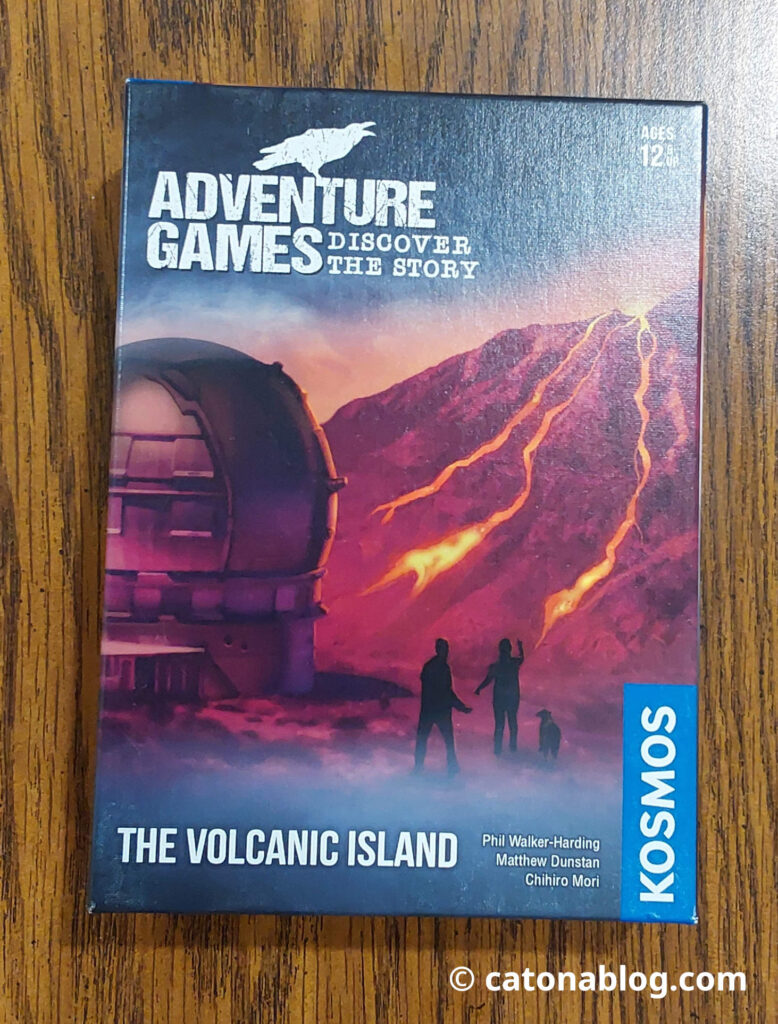
I recently bought this adventure game at a great discount.
It has a puzzle-solving vibe to it, though the story-driven mechanism indicates that there can be various paths and quite possibly distinct outcomes, depending on the choices we make.
My husband is certainly excited to try anything new, so we set aside a weekend evening to start this “journey”. The play was reasonably streamlined, not overly complicated, and the decision-making was meaningful. Even though I was not too impressed with the character-building aspect (or the lack of), the context felt realistic, and I even sensed a thrill down my spine when, in one paragraph, the heroes (us) were supposedly noticed by the evil guys, albeit from a distance.
It was a pleasant surprise, because after a session with two other friends exploring another title in the same production line five years ago, I was disappointed and marked the whole line as “meh”.
Why is there such a difference in my experience?
While it is possible that one is just more engaging than the other, their ratings online suggest the two are fairly similar in their overall quality, so I reflect on external factors – my mood, my attention, the environment, and playmates.
I begin to realize that the real differentiator is how much imagination I have devoted.
That time when two friends joined us for dinner on a Friday, one of them bringing the game “monochrome”, we were all a bit tired after a whole week’s work. Lively conversations flowed throughout the meal, but after plates were put away, our brains might be ready for a break.
The girl who owns it quickly explained the rules, and we jumped in. When paragraphs were read as instructed, they were done in a monotonous, matter-of-fact manner that I could not completely follow, and I often only got the gist of it after she summarized it in a dry tone. It was as if the whole point was to advance the progress and find a “boss” to fight (we did not encounter one yet). In spite of being able to get through the chapter without too much difficulty, afterwards none of us remembered much of it.
However, the situation last Sunday was quite different. My husband and I were alert, and we learned it together. We took turns being the narrator, discussed our options as if we were actually on a volcanic island investigating a mystery, and paused every now and then to visualize the setting.
In other words, we really applied our imagination. Sentences were no longer just groups of syllables – they depicted a fantastical world that we were temporarily transported into, without leaving our family room. I could smell the saltiness of the ocean by the beach, and I could hear the lightning striking the sky when the storm arrived.
Yet it was all in our heads. And that was the magic.
Truthfully, the prevalence of multimedia nowadays has not left much space for our imagination. Tales that used to be told only by words are now usually accompanied with pictures, videos, sound effects, and even completely “immersive” setup. They do satisfy some needs, but at the same time, they have deprived us of the opportunities to construct and understand the plot, the roles, and the fun of make-believe on our own. They can be overwhelming, not always in a positive way.
Perhaps it is our imagination that enables us to feel alive and active, that we are not just passive consumers of the creation of someone else.