Apr 3rd, 2026 Friday Cloudy
To have an early taste of spring, my husband and I took a vacation in Charleston, leaving behind the winter bleak lingering in our own town.
At first glance, Charleston must have been blessed by fortune since its earliest days. Situated on the coast, with very low elevation that allowed ships to easily go into the intricate waterways inland, Charleston drew many richest settlers. They built mansions, established plantations, brought with them the culture, art, and music. The heritage of these can still be seen throughout the city.
The climate (mild in winter, hot and humid in summer) was a double-edged sword for standard of living, but was undoubtedly favorable for the advancement of agriculture (anyone with gardening experience would be able to tell you that a longer growing season usually promises higher yield, especially if irrigation and sunlight are both sufficient). In an era when growing food was a major concern, abundance in agricultural production spelled of prosperity.
Even more fortunate for Charleston, it boasted off one of the best natural ports in the country. Not only was valuable goods produced, but they were quickly shipped to other parts of the world in exchange for payment or more investment. Needless to say, the city boomed.
However, this period of affluence was sandwiched between two wars: the American Revolution, and the Civil War.
During wartime, all the advantages of the city became the very reasons that it was targeted, attacked, fought over, and sometimes burned down.
During the American Revolution, Charleston attracted great fires from the British armies, partly due to its accessibility. At a time when water transportation was the most dependable way to travel long distance, battles could only occur where military forces could reach physically. We rarely see famous combats in secluded areas, because both sides would have to incur additional cost to get there.
During the Civil War, “scorched earth” tactic was widely used, which means to destroy anything that could provide economic benefits. In other words, the richness of resources in the areas surrounding Charleston were the justification of blazing it. Numerous historic buildings and homes could have been spared had the city not been “the wealthiest” at the time.
Today, the same tale continues to be on the stage.
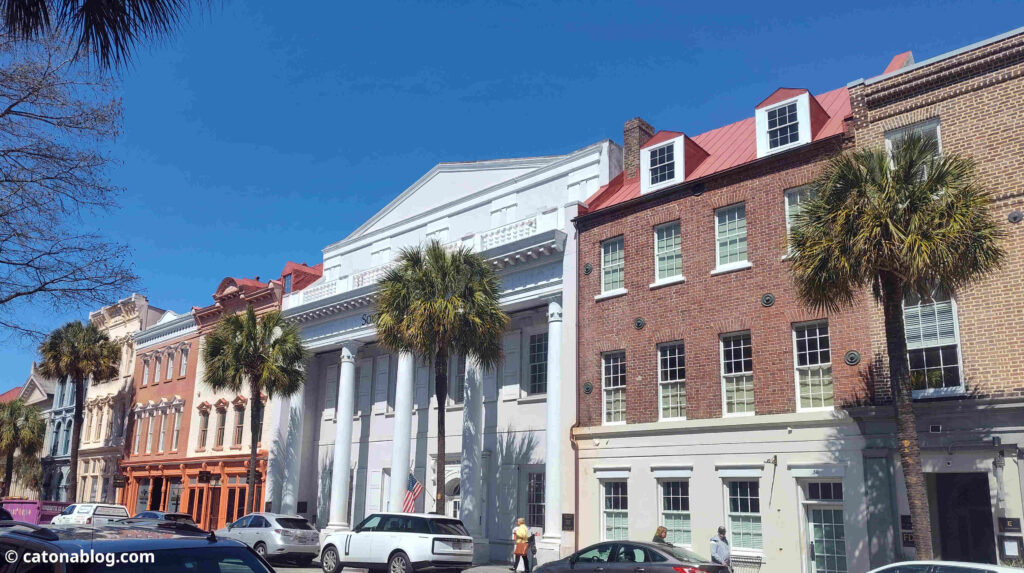
While the unique, deep history has bestowed Charleston with an old-fashioned charm, it is also setting limit to new development. The historic downtown is filled with beautiful houses dating back two to three centuries ago (a lot of them has a plaque by the door that explains the “fun facts” of the dwelling), preserving its past and at the same time, slightly intimidating the newcomers who are doubtlessly the foundation for the future.
Perhaps that could be true anywhere. A card that gives you opportunities will likely also present challenges. To stand the test of time, one must navigate wisely, and stay focused on what truly matters.
The palmettos along the streets are still smiling in the warm breeze.
Would you recommend a visit? It is on my “list”!
I would! Though I am not sure there is a lot to do for the kiddos, maybe except the beach? (Folly Beach – beach quality not bad, but the line to get there is LONGGGGG)